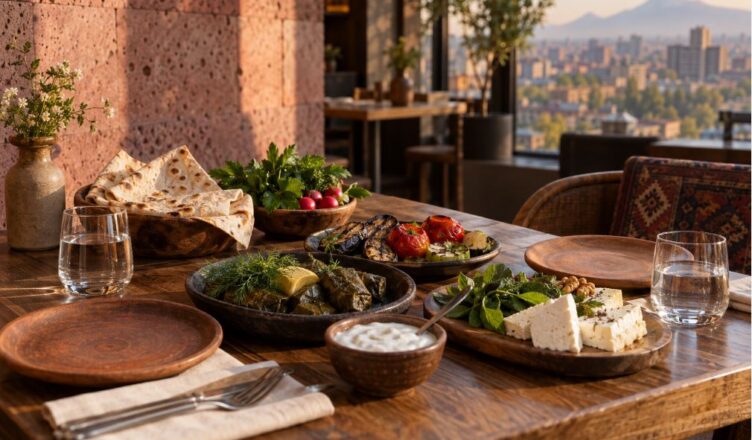
Ordering Armenian food in Yerevan looks easy until the plates begin arriving. You choose a salad, add cheese, ask for dolma, order something from the grill and agree when the waiter suggests lavash. Ten minutes later, your table resembles a family celebration — and the main course has not even appeared.
This is not necessarily a tourist trap or a misunderstanding. Armenian meals are often designed around sharing. Bread, herbs, cheese, vegetables, sauces and hot dishes come together gradually, creating a table that feels much larger than the original order.
For first-time visitors, the challenge is not finding delicious food. It is understanding how the meal is structured, how large the portions may be and which dishes naturally belong together.
This guide will help you read a restaurant menu in Yerevan, order with confidence and enjoy Armenian cuisine without wasting food or discovering too late that you ordered enough for a small wedding.
Why Armenian Restaurant Menus Can Feel Confusing
A traditional Armenian menu may include several sections that look independent but are meant to be combined. Cold starters, salads, bread, herbs, cheese, soups, grilled meat and side dishes are not always treated as separate courses in the strict Western sense.
Many dishes may arrive whenever they are ready. Cold items usually appear first, while grilled food follows later. Bread and herbs may remain on the table throughout the meal.
This creates a relaxed, communal style of eating. It also explains why ordering one item from every section can quickly become excessive.
Before confirming your order, ask one useful question:
“Is this enough for two people?”
Most restaurant staff in central Yerevan are familiar with international visitors and can help you estimate portions. If the answer is unclear, begin with fewer dishes. You can always order more.
Start with the Armenian Table Basics
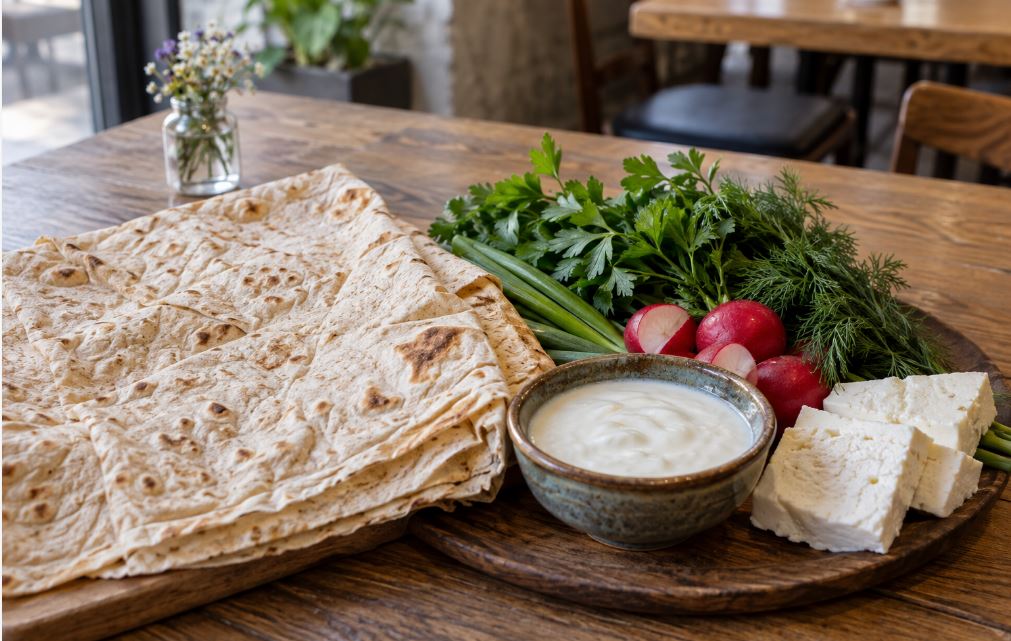
A classic Armenian meal often begins with several simple ingredients that work together rather than separately.
You may see:
- Lavash — thin Armenian flatbread
- Fresh herbs — commonly parsley, coriander, dill, basil or tarragon
- White cheese — usually salty and served in slices or pieces
- Seasonal vegetables — tomatoes, cucumbers, peppers and radishes
- Matsun — a fermented milk product with a pleasantly sour taste
These ingredients can form a small meal by themselves. A piece of cheese and several herbs are wrapped in lavash, sometimes with tomato or cucumber.
If you order bread, a cheese plate, a vegetable plate and an herb selection separately, remember that you are already building a substantial first course.
Dolma or Tolma: What Are You Actually Ordering?
You may see the dish written as dolma or tolma. Both spellings are commonly understood.
In Armenia, the word can refer to more than one preparation. The most familiar version contains seasoned minced meat and rice wrapped in grape leaves. Another popular version uses vegetables such as peppers, tomatoes or eggplants as the edible container.
There is also pasuts tolma, a meat-free version traditionally associated with fasting periods. It may contain beans, lentils, chickpeas, grains and herbs.
Do not assume every dolma plate is a small appetizer. Depending on the restaurant, it may be filling enough to serve as a main dish, especially when accompanied by matsun-based sauce.
If you are ordering several starters, one portion of dolma may be enough for two people to taste.
Khorovats Is More Than “Just Barbecue”
Khorovats is Armenian grilled meat, but the word does not describe one universal plate. Menus may offer pork, lamb, beef, chicken or grilled vegetables under the same general category.
Ask what cut of meat is used and whether the portion includes bones. This matters because two servings with the same listed weight may provide very different amounts of edible meat.
Grilled potatoes or vegetables are not always included automatically. Check whether side dishes must be ordered separately.
If you are sharing, consider ordering one type of meat first instead of several. Khorovats is often richer and more filling than it appears in menu photographs.
Do Not Ignore the Soups
Visitors often focus on grilled meat and overlook Armenian soups, even though they can be among the most memorable dishes on the menu.
Common choices may include:
- Spas — a warm fermented-milk soup usually prepared with grains and herbs
- Khashlama — a substantial meat dish with broth and vegetables; recipes vary considerably
- Bozbash — a rich meat-based soup or stew found in different regional versions
- Arishta soup — a comforting soup made with traditional Armenian noodles
Some soups are light enough to begin a meal, while others are effectively a complete lunch. If a description is vague, ask whether the soup is light or filling before ordering additional main courses.
Foods That Sound Similar but Are Not the Same
Transliterated Armenian names can be confusing, particularly when a menu provides little explanation.
Harissa is a slow-cooked Armenian dish made from wheat and meat. It should not be confused with the North African chilli paste carrying the same name.
Gata is a traditional pastry that varies by region and bakery. Some versions are soft and bread-like, while others are crumbly, sweet and filled with a buttery mixture.
Jingalov hats is a thin flatbread filled with chopped greens and herbs. It is strongly associated with Artsakh and is an excellent option for travelers who want something flavorful without ordering meat.
Arishta refers to traditional handmade noodles. They may appear in soup or as a side dish served with butter, matsun or another accompaniment.
Vegetarian Travelers Have More Choices Than They Expect
Armenian cuisine is often presented through grilled meat, but a vegetarian meal is usually easy to assemble.
Look for grilled vegetables, bean dishes, lentil soups, salads, eggplant rolls, spas, vegetable tolma, cheese, lavash and seasonal greens.
However, do not rely only on the name of a dish. A vegetable soup may use meat broth, beans may be cooked with animal fat and rice dishes may contain small pieces of meat.
A simple question can prevent confusion:
“Is this completely meat-free, including the broth?”
Vegans should also ask about butter, cheese, sour cream, matsun and eggs. These ingredients are common even when they are not obvious from the menu title.
How to Handle Food Allergies
If you have a serious food allergy, do not depend entirely on menu icons or automatic translation.
Ingredients such as walnuts, dairy products, wheat, eggs and sesame can appear in sauces, pastries, salads and garnishes. Cross-contact may also be possible in small kitchens.
Prepare a clearly written translation of your allergy in Armenian before visiting a restaurant. Show it to the server and ask whether the kitchen can safely prepare a suitable dish.
If the staff appear uncertain, choose a simpler dish with easily identifiable ingredients or eat somewhere better equipped to answer detailed questions.
This article provides general travel information and should not replace professional medical guidance for people with severe allergies.
The Smartest Way to Build Your First Armenian Meal
For two people, a balanced first order might include:
- one salad or vegetable plate;
- lavash with herbs or cheese;
- one shared starter, such as dolma or eggplant rolls;
- one grilled dish or another substantial main course;
- one side dish, if it is not already included.
Wait until the food arrives before adding more. Armenian restaurant tables fill quickly, and what seems modest on paper can become generous once bread, sauces and garnishes are included.
If you still have room, finish with gata, Armenian ice cream, seasonal fruit or coffee.
Service Charges, Tips and the Final Bill
Before paying, examine the menu and receipt to see whether a service charge has already been added. Practices vary between restaurants, so there is no single rule that applies everywhere in Yerevan.
If service is not included and you are satisfied with the experience, you may leave a tip according to your preference. Tipping should reflect the actual service rather than pressure or confusion.
Card payments are widely accepted in many central restaurants, but carrying some Armenian drams is still useful for smaller cafés, bakeries and establishments outside the busiest areas.
Prices, payment policies and opening hours may change. Verify important details directly with the restaurant before ordering or making a special journey.
Useful Questions to Ask the Server
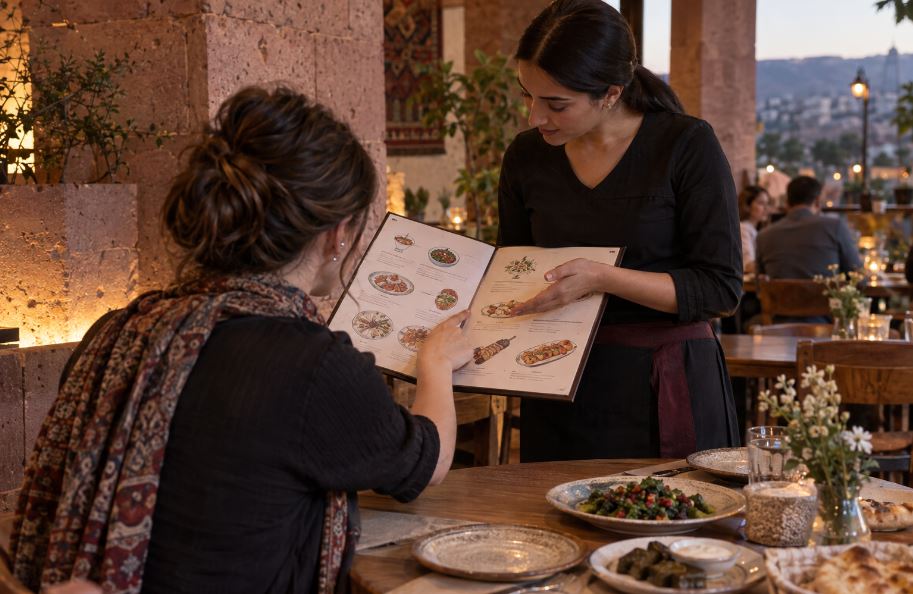
You do not need to understand every Armenian food name. A few practical questions are usually enough:
- Is this dish large enough to share?
- Does the portion include a side dish?
- Is the meat served with bones?
- Is this spicy?
- Does it contain walnuts or other nuts?
- Is the broth vegetarian?
- Is service included in the bill?
- Can we order more later?
Do not feel embarrassed about asking. It is better to clarify before ordering than to waste food or receive something unsuitable.
One Cultural Detail That Makes the Meal Better
In Yerevan, food is rarely treated as fuel alone. Meals are a reason to talk, share and remain at the table longer than planned.
Do not expect every plate to arrive simultaneously. Avoid rushing the staff simply because one person received a dish first. In many restaurants, the table develops in stages, especially when grilled food is prepared to order.
Try a little of everything, share dishes and allow time for the meal to unfold. The experience becomes much more enjoyable when you stop trying to force it into a rigid sequence.
Final Advice: Order Less, Then Add More
The most useful rule for eating in Yerevan is surprisingly simple: your first order does not need to be your final order.
Begin with a few dishes, see how large they are and decide what the table still needs. This approach saves money, reduces waste and gives you more control over the meal.
Armenian cuisine is best discovered gradually. One day you may remember the khorovats; another day it may be a bowl of spas, warm lavash or the combination of herbs and salty cheese that stays with you.
Come hungry, ask questions and leave enough space on the table. In Yerevan, the food often arrives with more generosity than the menu can explain.