
Yerevan changes character when the theatre doors open. The traffic is still moving outside, cafés are still filling up and Republic Square may still be crowded, but inside the city’s performance halls another rhythm takes over. Coats are checked, paper tickets appear from pockets, families look for their rows and the conversation drops to a whisper as the lights begin to fade.
For visitors, a theatre evening can be one of the most memorable and surprisingly accessible experiences in the Armenian capital. It can also produce a dozen practical questions that ordinary travel guides rarely answer. Will the performance be in Armenian? Are online tickets reliable? Is formal clothing expected? What happens if you arrive late? And which venue makes sense if you do not understand the language?
This guide explains how to plan a theatre night in Yerevan without guesswork.
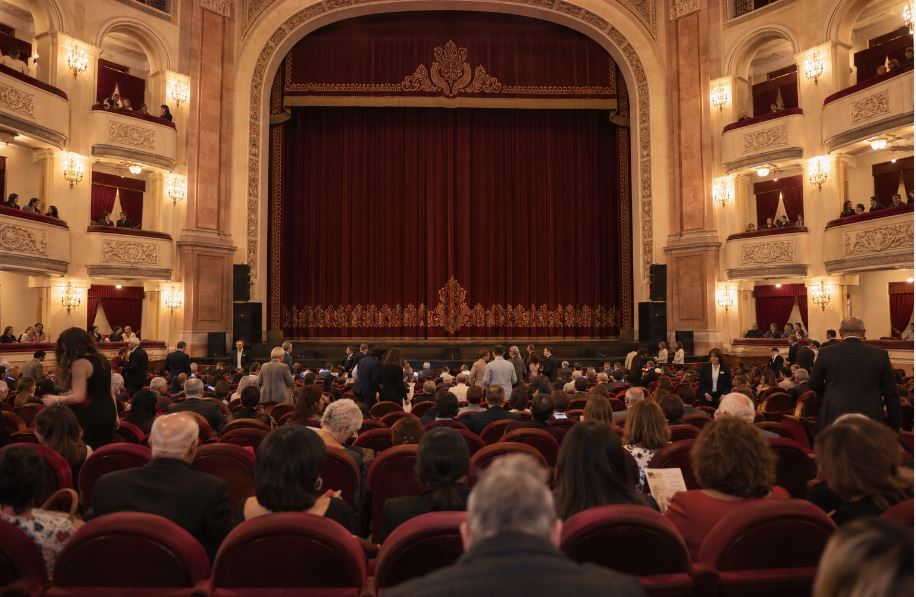
A theatre evening reveals a quieter, more ceremonial side of Yerevan.
Why a Theatre Night Belongs in a Yerevan Itinerary
Many travelers automatically reserve their evenings for dinner, wine bars or another walk through the centre. Theatre offers something different. You are not simply looking at a monument or hearing a guide explain local culture. You are sharing a room with a Yerevan audience and seeing what the city chooses to applaud.
The experience can also be excellent value compared with major European capitals. Prices vary by venue, production and seat, so there is no single “normal” ticket price. However, visitors can often find options ranging from modestly priced drama performances to premium seats for major opera, ballet and concert productions.
The most important rule is simple: choose the performance first and the building second. A famous venue does not guarantee that a particular production will suit a visitor who does not speak Armenian.
Which Yerevan Theatre Should You Choose?
Armenian National Opera and Ballet Theatre
This is the easiest starting point for many international visitors. The building stands at the centre of Yerevan’s cultural map, and its programme includes opera, ballet and concerts. Ballet is the safest language-free choice. Familiar operas can also be enjoyable if you read the synopsis before arriving, but surtitles or translated text should never be assumed. Check the details of the exact performance.
The theatre’s official website publishes its current repertoire and links to its ticket system. The schedule changes throughout the season, and special concerts may begin later than standard evening performances.
Gabriel Sundukyan National Academic Theatre
Sundukyan is a strong choice for travelers curious about Armenian dramatic culture. Productions are commonly performed in Armenian, which makes the venue more rewarding for Armenian speakers or visitors willing to read the plot in advance and concentrate on staging, movement and atmosphere.
Do not dismiss a play simply because you do not know the language. Physical comedy, familiar classics and visually expressive productions can still work well. A dialogue-heavy contemporary drama, however, may be difficult without translation.
Stanislavski Russian Drama Theatre
Russian-speaking visitors have another practical option in central Yerevan. The Stanislavski Theatre is known for Russian-language drama and may be easier to follow than an Armenian production. Confirm the language of the specific event when booking, especially for visiting performances or festivals.
Smaller and Children’s Theatres
Yerevan also has chamber stages, puppet productions, musical performances and children’s programmes. These can be more intimate than the city’s grand halls, but they may provide less information in English. When the event page is unclear, contact the venue directly and ask three questions: performance language, approximate duration and whether there is an interval.
How to Choose a Performance When You Do Not Speak Armenian
Language should influence your choice, but it does not have to cancel the evening. Use this order of preference:
- Ballet: the most straightforward option because the story is told through music and movement.
- Instrumental concert: no translation is needed, although programme notes may be in Armenian.
- Opera with a familiar plot: read a synopsis beforehand and verify whether surtitles are offered.
- Visual comedy or puppet performance: often easier to follow through action, but check the recommended age and language.
- Spoken drama: best when you understand the performance language or already know the play well.
A common mistake is to see an English title on a ticket page and assume that the performance itself is in English. The translated title may exist only to help users navigate the website. Look for a separate language note or ask the theatre.
Buying Tickets: Online or at the Box Office?
For the Opera and Ballet Theatre, begin with the venue’s official schedule and ticket link. Other Yerevan events may be sold through local ticket platforms or directly at a theatre box office. Use the organiser’s official page to confirm that you are following the correct sales link.
Before paying online, check:
- the exact venue and hall;
- the date and starting time;
- the performance language;
- your row and seat numbers;
- whether the ticket must be printed or can be scanned from a phone;
- the refund or exchange conditions.
If the seating plan is confusing, the box office can be the better choice. Staff can show which seats are available and explain the hall layout. A screenshot of the event title and date is useful if you do not speak Armenian. Keep the ticket until the performance ends, because an usher may ask to see it again after the interval.
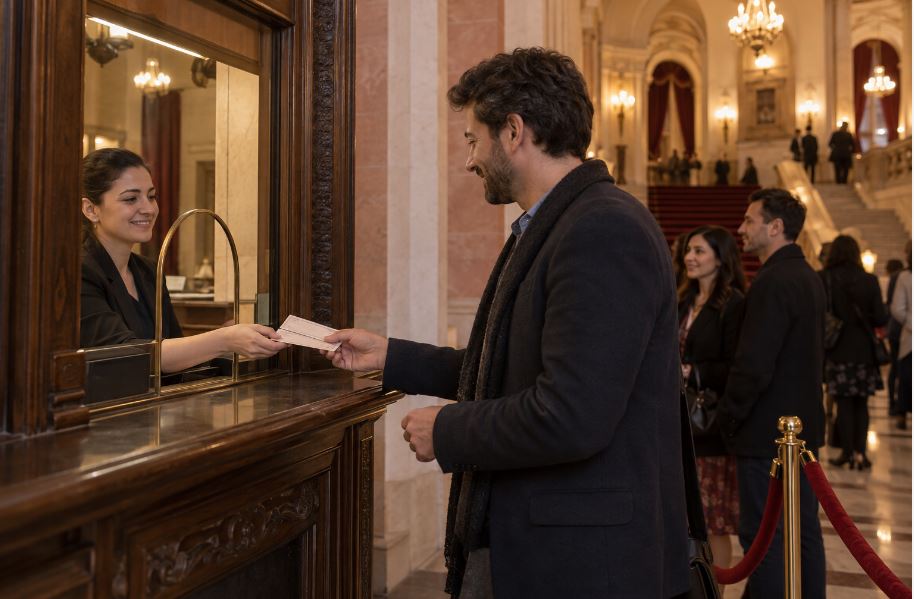
When an online seating plan is unclear, buying at the box office can be the simplest solution.
Do You Need to Dress Up?
Yerevan audiences often dress neatly for an evening performance, particularly at the opera, ballet or a gala concert. That does not mean a tourist needs formal evening wear. Smart casual clothing is usually the safest choice: clean trousers or a modest dress, a shirt or polished top and presentable shoes.
You are unlikely to be the only person dressed casually, but beachwear, gym clothes or an oversized sightseeing backpack may feel out of place. In winter, outerwear may need to be left in the cloakroom. Allow extra time for this before the performance and after the final curtain.
Why Arriving “Exactly on Time” Can Still Make You Late
A theatre ticket shows when the performance begins, not when you should reach the door. Plan to arrive about 25 to 35 minutes early. You may need to locate the correct entrance, pass a ticket check, leave a coat, find the right floor and ask an usher for your row.
Late seating depends on the venue and production. You may be asked to wait until a suitable pause, directed to a temporary seat or refused entry until the interval. Do not build your plan around being admitted after the curtain rises.
Central Yerevan traffic can slow unexpectedly, and a map pin may not point to the audience entrance. If you are unfamiliar with the area, walk to the venue earlier in the day or check the entrance before dinner.
Phones, Photography and Applause
Silence your phone completely before the lights go down. Vibration can still be audible in a quiet hall. Screen light is even more distracting than sound, so avoid checking messages during the performance.
Photography and video rules vary. A quick photo of the auditorium before the performance may be tolerated in some venues, while recording during the show may be forbidden. Follow the announcement and the ushers’ instructions. Never use flash.
If you are unsure when to applaud, follow the audience. Ballet and opera crowds may applaud after a demanding aria, dance or orchestral passage as well as at the end of an act. There is no need to anticipate the moment.
The Interval Is Part of the Experience
During the interval, people stretch their legs, meet friends in the foyer and discuss the performance. Check the approximate interval length before joining a queue. Take your ticket with you if you leave the hall, and note the door or section through which you entered.
Large venues can have several similar corridors and levels. Photographing your row and entrance number before sitting down can save an awkward search later, provided photography is permitted in the lobby.
A Simple Plan for a Stress-Free Theatre Evening
- Two or three days before: confirm the performance, language, venue and ticket format.
- Earlier that day: read a short synopsis if you are attending an opera or play.
- One hour before: finish dinner or coffee; do not rely on a slow restaurant bill.
- Thirty minutes before: enter the building, use the cloakroom and locate your seat.
- Five minutes before: silence your phone and settle in.
- After the performance: expect cloakroom and taxi demand to peak at the same time.
Final Advice: Do Not Wait for the “Perfect” International Performance
The best theatre night in Yerevan is not necessarily the event with the most English information or the most expensive seats. It is the one you can follow comfortably and attend without rushing. For a first visit, ballet or a concert is the simplest choice. For a deeper cultural experience, choose Armenian drama, learn the outline in advance and let the acting carry what the words cannot.
Yerevan’s theatres are not attractions frozen for tourists. They are working cultural spaces filled with local habits, expectations and emotion. Spend one evening inside, and the city outside may feel different when you return to the street.