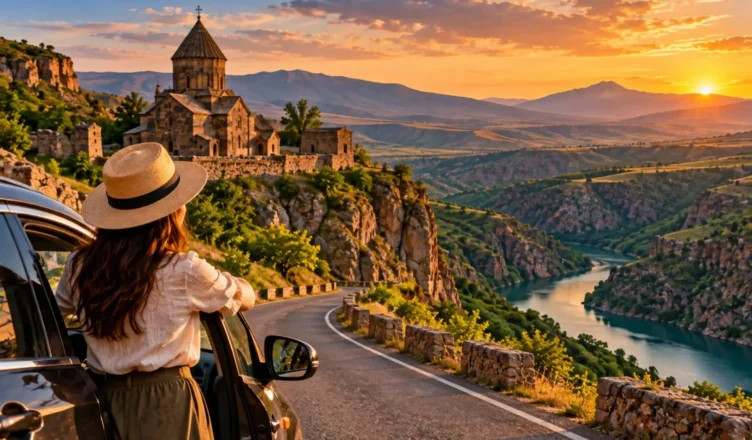
That was the biggest lesson of traveling across the country.
Armenia is not simply a collection of famous monasteries and viewpoints. Its real character becomes clearer in the transitions between places — in mountain roads, regional towns, quiet guesthouses, roadside stops and landscapes that look completely different from one province to another.
Here are nine things I understood only after traveling beyond Yerevan.
1. Armenia Is Not One Landscape
Before traveling through the country, it is easy to imagine Armenia as one continuous mountain landscape.
That impression disappears quickly once you begin moving between regions.
Vayots Dzor can feel dry, rugged and almost desert-like.
Lori becomes dramatically greener, with deep valleys and forested slopes.
Tavush can feel even more wooded and humid.
Syunik introduces enormous cliffs, deep gorges and long mountain roads.
Gegharkunik opens into the huge blue space of Lake Sevan.
These changes can happen within a single day of driving.
The result is that traveling across Armenia rarely feels repetitive.
2. The Road Between Places Is Often Part of the Destination
In many countries, driving is simply the time you spend getting from one attraction to another.
In Armenia, the road often becomes one of the strongest parts of the trip.
A mountain pass suddenly opens onto a huge valley.
A road curves beside a reservoir.
A village appears beneath cliffs.
You stop because of a view that was never included in your itinerary.
This happens often enough that it changes the way you travel.
You begin planning fewer stops because you realize the spaces between them deserve time too.
3. Small Towns Reveal a Different Rhythm
Yerevan is lively, social and increasingly modern.
Regional Armenia often moves differently.
In smaller towns, daily life can feel slower and more visible.
People shop in local markets, sit outside cafés, walk familiar streets and recognize one another.
There is less separation between “tourist space” and everyday life.
This makes places such as Gyumri, Goris, Dilijan and smaller regional centers worth experiencing as destinations rather than simply overnight stops.
You begin to notice architecture, local food, courtyards and conversations that would be easy to miss on a rushed day trip.
4. Staying Overnight Changes Everything
One of the biggest differences between seeing Armenia and experiencing Armenia is where you sleep.
If you return to Yerevan after every excursion, you spend a surprising amount of time retracing the same roads.
Staying overnight in another region changes the rhythm completely.
You can explore early in the morning before day visitors arrive.
You can stay for sunset instead of watching the clock.
You can eat dinner locally rather than rushing back to the capital.
And sometimes the evening itself becomes the most memorable part of the trip.
A quiet guesthouse in Lori or Syunik can teach you more about regional Armenia than another hurried attraction added to the schedule.
5. Weather Can Change Faster Than Your Plans
Mountain geography creates another surprise: weather can vary significantly between regions.
You may leave Yerevan under bright sun and encounter fog, rain or much cooler temperatures several hours later.
Elevation matters.
Season matters.
And local mountain conditions matter.
This is especially important when hiking or traveling through higher areas.
The practical lesson is simple: even in warm months, carry an extra layer and do not rely only on Yerevan’s weather forecast.
6. Regional Food Becomes Part of the Journey
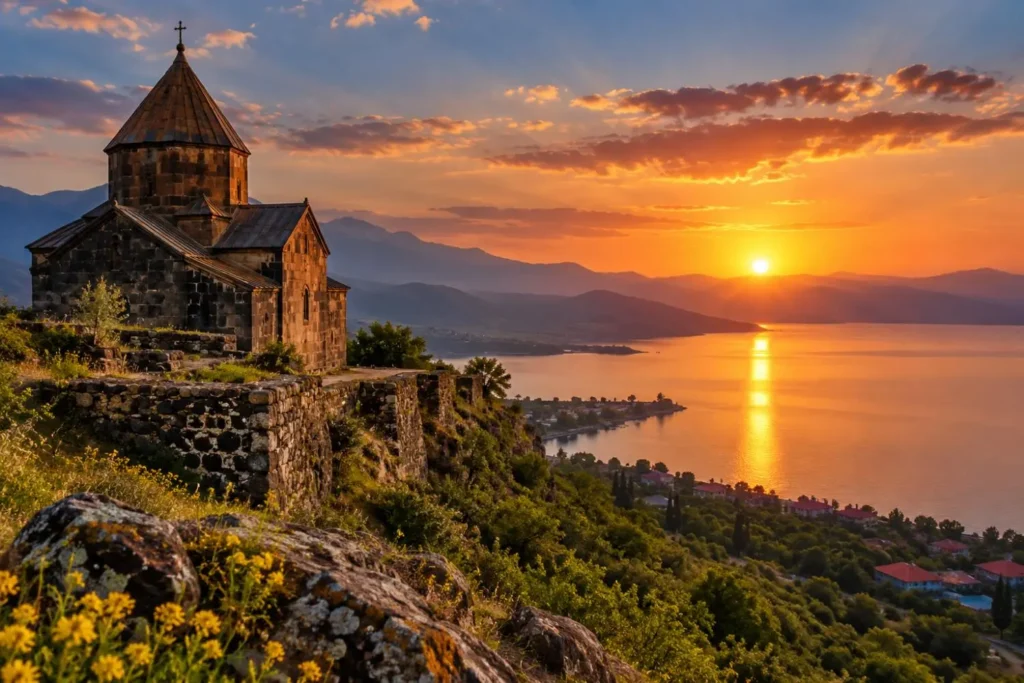
Food feels different once you stop treating it as something you only experience in Yerevan restaurants.
Regional travel introduces roadside fruit, homemade preserves, local cheese, village bakeries, family-run restaurants and seasonal ingredients.
You may stop for lunch because you are hungry and discover that the meal becomes one of the strongest memories of the day.
This also makes the trip feel more connected to place.
Eating locally is not only about trying another dish.
It tells you something about what grows, what is produced and how people eat in that particular region.
7. Armenia Feels Older Outside the Capital
Yerevan contains plenty of history, but regional Armenia often makes the past feel much closer.
A monastery may stand above a village.
A medieval church may still be in regular use.
Ancient stone bridges, cemeteries, khachkars and ruins appear beside modern roads.
History is not always presented as a museum exhibit.
It exists directly inside the landscape.
This is especially noticeable in places where centuries-old structures remain surrounded by villages, fields and mountains rather than modern tourist infrastructure.

8. Silence Becomes Part of the Experience
One thing rarely mentioned in travel guides is how quiet Armenia can become once you leave major roads and cities.
At some monasteries, viewpoints or mountain villages, there may be moments when you hear almost nothing except wind, birds or water.
That silence changes the experience of a place.
It encourages you to stay longer.
It also explains why rushing from landmark to landmark often feels wrong here.
Some places need ten minutes of doing nothing before they begin to make sense.
9. The Best Memories Are Often Impossible to Schedule
After traveling through Armenia, the carefully planned stops may not be the memories that stay with you longest.
You may remember a dog following you along a village road.
A roadside stand where you tasted fruit.
A sudden view after turning a corner.
An evening conversation at a guesthouse.
A bakery you entered without knowing its name.
A monastery that was completely empty when you arrived.
None of these experiences are guaranteed.
That is exactly why they are memorable.
How I Would Travel Across Armenia Differently Next Time
If I planned the journey again, I would make the itinerary slower.
I would choose regions rather than trying to collect famous attractions.
For example:
- Lori: spend two days combining monasteries, canyons and small towns.
- Syunik: stay overnight instead of trying to reach Tatev and return to Yerevan in one day.
- Tavush: combine Dilijan with villages, forests and hiking rather than treating it as a short stop.
- Vayots Dzor: connect Noravank, Areni, local food and wine into one slower regional route.
- Gegharkunik: explore more than only Sevanavank and the busiest sections of Lake Sevan.
This approach produces fewer checkmarks on a list — but much stronger memories.
What Traveling Across Armenia Really Changed for Me
Before traveling around the country, I thought Armenia would be easy to summarize.
Ancient monasteries.
Mountains.
Good food.
Friendly people.
All of those things are true.
But they are incomplete.
What makes Armenia feel different is how these elements overlap.
A medieval monastery is connected to a village.
A meal is connected to hospitality.
A mountain road becomes part of the destination.
A small town becomes as memorable as a famous landmark.
And a country that looks compact on the map begins to feel unexpectedly varied once you travel through it slowly.
That is the Armenia I only understood after leaving Yerevan.