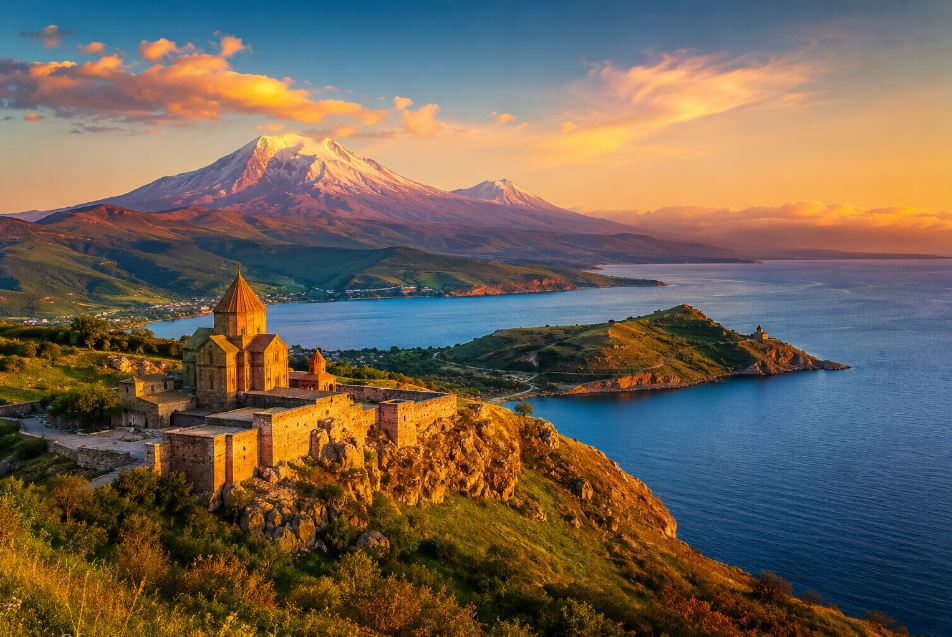
When I first arrived in Armenia, I immediately understood that this was not the kind of country you fully understand in one or two days. At first, I noticed the mountains surrounding Yerevan, the warm sunlight reflecting on the city’s pink stone buildings, the calm blue waters of Lake Sevan, and ancient monasteries standing quietly on cliffs.
But the more I traveled, the more I realized that Armenia slowly turns from a destination into a feeling — a country built on history, faith, hospitality, dramatic landscapes and a very special human warmth.
Before coming here, I expected beautiful scenery and old churches. What I did not expect was how emotionally memorable the country would feel. I found myself drinking morning coffee in lively Yerevan cafés, driving through mountain roads that looked almost unreal, walking inside centuries-old monasteries carved into stone, and ending days watching sunsets over landscapes I honestly did not expect to find in such a small country.
For travelers looking for culture, history, nature, food and authentic experiences, Armenia feels surprisingly powerful.
Why Armenia Felt So Different To Me
One of the first things that surprised me was how much variety exists inside such a small country. On the map, Armenia looks compact, but once I started traveling, every few hours brought completely different landscapes and experiences.
During my trip I found:
- ancient monasteries hanging above deep canyons,
- modern café life in Yerevan,
- quiet mountain villages,
- wine regions and traditional food culture,
- green forests and alpine lakes,
- a country where history feels present everywhere.
What I liked most was that Armenia never felt overly commercial. Daily local life still dominates everything, which makes travel here feel much more genuine.
Yerevan: The Place Where I Started Understanding Armenia
Like most travelers, I began my journey in Yerevan. I knew it was one of the world’s oldest continuously inhabited cities, but I did not expect how modern and relaxed it would feel at the same time.
I spent my first hours walking around Republic Square, where the pink volcanic stone buildings glow beautifully under sunlight. Later I climbed the Cascade Complex and stood there watching the city spread beneath me with Mount Ararat visible in the distance.
What I quickly noticed was how social the city feels. Open-air cafés are everywhere, people spend long evenings outside, music is always somewhere in the background, and conversations seem to last for hours.
Very quickly, I understood that Yerevan is not simply the capital of Armenia — it is one of the strongest parts of the entire travel experience.
For practical city information, I later used this complete Yerevan travel guide.
Lake Sevan: One of Armenia’s Most Beautiful Surprises
One of the places I was most curious about before coming was Lake Sevan.
What I found there felt very different depending on the time of day. In the morning, the water looked deep blue. Later, clouds changed the colors completely. By sunset, the lake turned almost golden.
I visited Sevanavank Monastery standing above the water, and from there I could see just how vast the lake really is.
After the heat of Yerevan, Sevan felt refreshing. I immediately understood why so many locals escape here during summer.
Dilijan: Armenia’s Quiet Green Side
After several busy days, arriving in Dilijan felt like entering a completely different version of Armenia.
The town is surrounded by forests, mountains, fresh air and a calmer atmosphere. I immediately noticed how much slower life feels here compared to Yerevan.
I walked through old streets, visited local craft shops, explored nearby monasteries like Haghartsin and Goshavank, and spent time simply enjoying the silence.
Dilijan felt like the perfect place for travelers who want to slow down and see a greener side of Armenia.
Tatev: The Most Dramatic Journey I Experienced
Of all the places I visited, Tatev probably left the strongest impression on me.
The monastery stands on the edge of a dramatic gorge, surrounded by mountain landscapes that feel almost unreal.
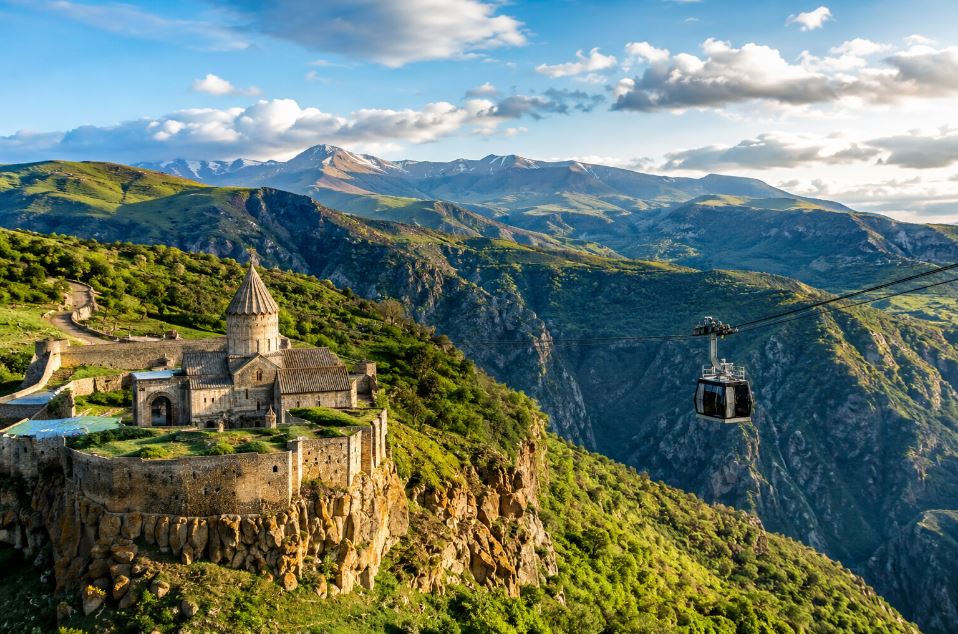
Even getting there felt like part of the adventure. I took the famous Wings of Tatev cable car, which carries visitors high above deep valleys and cliffs.
Standing there, I understood that Tatev is much more than a beautiful viewpoint. It feels like one of those places where Armenian history, religion and nature come together in an unforgettable way.
Garni and Geghard: Stone, Silence and Ancient History
Another day trip I took from Yerevan was to Garni and Geghard.
Garni Temple immediately stood out because it looks unlike anything else I had seen in Armenia. This classical pagan temple sits above Azat Gorge and reminds visitors of Armenia’s pre-Christian history.
Not far away, Geghard Monastery felt completely different. Part of the monastery is carved directly into the rock, and the atmosphere inside was quiet, mysterious and deeply emotional.
Seeing these two places together gave me one of the clearest understandings of Armenia’s historical depth.

Areni: Where I Discovered Armenia’s Wine Culture
Before coming to Armenia, I did not fully realize how old Armenian winemaking traditions actually are.
That changed when I visited Areni, the country’s most famous wine region.
I learned that Armenian wine culture has ancient roots, and tasting local wine here felt like experiencing a tradition that has existed for thousands of years.
Nearby Areni Cave also connects the region with some of the oldest known winemaking history in the world.
I combined this trip with nearby Noravank Monastery surrounded by dramatic red cliffs, and it became one of the most memorable days of my journey.
Gyumri: A Completely Different Side of Armenia
Gyumri felt very different from Yerevan.
The city immediately gave me a sense of personality. It felt artistic, emotional, humorous and very authentic.
I noticed the black stone architecture, creative atmosphere, museums, old streets, local humor and a very warm connection between people.
If Yerevan feels modern and energetic, Gyumri feels soulful and deeply connected to old Armenian identity.
The Hidden Places I Remember Most
Interestingly, some of my strongest memories did not come from famous landmarks.
Instead, I remember:
- small roadside fruit stands,
- unexpected viewpoints during mountain drives,
- tiny local bakeries,
- quiet churches without tourists,
- small villages hidden between mountains.
Armenia taught me something important: beauty here is often found where you least expect it.
When I Would Visit Armenia Again
After traveling through different parts of the country, I realized Armenia can be visited any time of year — but every season feels different.
- Spring: green landscapes and comfortable weather.
- Summer: Lake Sevan, festivals and mountain escapes.
- Autumn: probably my favorite season for wine, food and road trips.
- Winter: quiet city cafés, snowy landscapes and ski resorts like Tsaghkadzor.
If I had to choose, I would probably return in autumn.
The Route I Would Personally Recommend
If I were planning a 7-day Armenia trip again, I would choose this route:
Day 1: Explore Yerevan, Republic Square, Cascade and local restaurants.
Day 2: Visit Garni Temple, Geghard Monastery and Symphony of Stones.
Day 3: Travel to Lake Sevan and continue to Dilijan.
Day 4: Explore Haghartsin, Goshavank and Dilijan old town.
Day 5: Visit Gyumri.
Day 6: Travel through Areni, Noravank and the wine region.
Day 7: Take a longer trip to Tatev or spend one final evening in Yerevan.
Small Practical Things I Learned
Traveling in Armenia is relatively easy, but I quickly learned a few useful things.
Mountain roads can look short on the map but take much longer than expected. Weather can change quickly in higher regions. Comfortable shoes are essential, and carrying at least one warm layer is useful even during summer.
Food quickly became one of the strongest parts of my experience.
I would absolutely recommend trying:
- lavash,
- khorovats,
- dolma,
- gata,
- local cheeses,
- Armenian wine.
Meals here are rarely just about eating. They often become long conversations filled with hospitality.
Why Armenia Stayed With Me
After leaving Armenia, I understood that what stayed with me most was not only what I saw.
It was how the country made me feel.
I remember ancient stone monasteries, mountain silence, evening lights in Yerevan, warm bread, conversations with locals, roads through dramatic landscapes and the feeling that the country never tried too hard to impress me — yet somehow left a much deeper impression than many bigger destinations.
For me, Armenia stopped feeling like a destination on the map.
It became one of those places that stays in memory long after the journey ends.