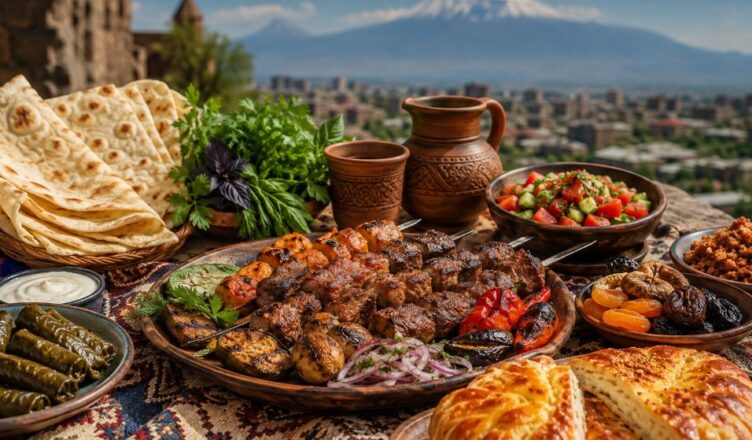
When I first started exploring Armenian food, I quickly understood that it is not only about dishes, ingredients, or recipes. Armenian food is about warmth, family, conversation, memory, and the feeling of being welcomed at the table.
During my time in Armenia, I noticed that food is always more than just food. It appears in the most ordinary moments and in the most special ones. It is there when families gather, when friends meet, when guests arrive, when people celebrate, and even when someone simply wants to share a quiet cup of coffee.
For me, Armenian cuisine became one of the most beautiful ways to understand the country. Every meal seemed to tell a small story. Some dishes were simple and homemade, others were festive and rich, but almost all of them carried a feeling of tradition and care.
Why Armenian Food Felt So Special to Me
What impressed me most about Armenian food was its honesty. The flavors are natural, generous, and closely connected with the land. Fresh herbs, vegetables, meat, dairy products, grains, fruits, and homemade bread are everywhere. Nothing feels random on the Armenian table.
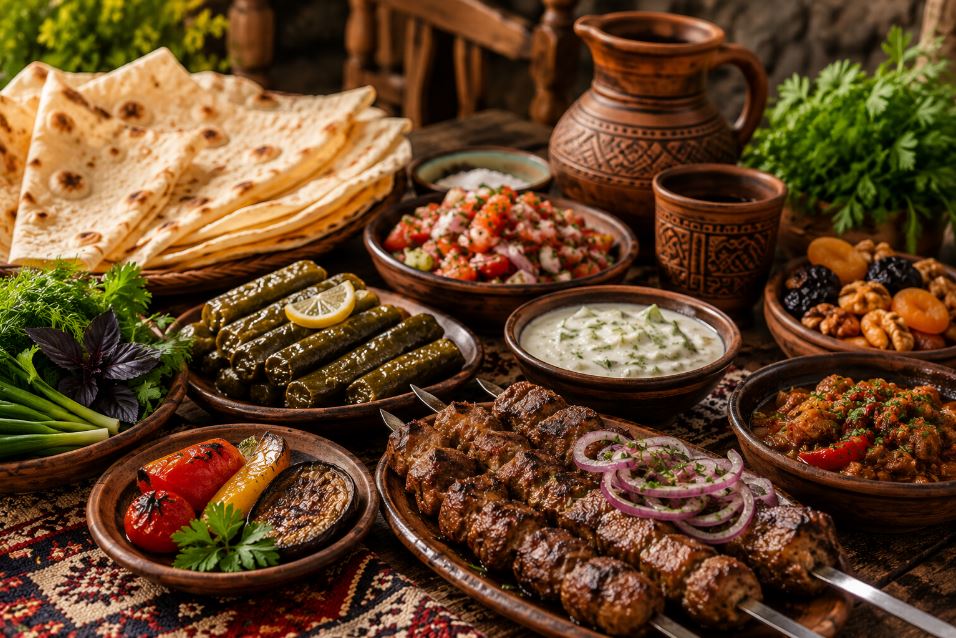
I also noticed that the atmosphere around the food is just as important as the food itself. A small meal can suddenly turn into a long conversation. A simple table can quickly fill with lavash, cheese, greens, pickles, salads, fruit, and several homemade dishes. It often feels as if the table is saying: stay longer, eat more, feel at home.
Lavash: The Bread I Saw Everywhere
One of the first things I noticed in Armenia was lavash. This thin, soft flatbread is everywhere, and it feels almost impossible to imagine an Armenian meal without it. I saw it served with cheese, herbs, khorovats, soups, salads, and even simple everyday snacks.
What makes lavash special is not only its taste, but also its meaning. Traditionally, it is baked in a clay oven called a tonir. Watching how lavash is prepared feels like watching an old tradition come alive. The dough is stretched by hand, placed inside the hot oven, and baked very quickly.
For me, lavash became a symbol of the Armenian table. It is simple, but it connects almost every dish.
Khorovats: The Taste of Fire, Family, and Celebration
If there is one dish that immediately made me feel the spirit of Armenian gatherings, it was khorovats. Armenian barbecue is not just grilled meat. It is an entire atmosphere. The smell of fire, the sound of people talking, the fresh herbs on the table, and the pieces of meat wrapped in lavash all create a very special experience.
I understood that khorovats is strongly connected with weekends, village trips, family events, and celebrations. It can be made with pork, lamb, beef, chicken, or vegetables, but the main ingredient always seems to be good company.
Served with lavash, onions, tomatoes, eggplants, peppers, herbs, and sometimes potatoes cooked in the fire, khorovats became one of the most memorable dishes I tried in Armenia.
Dolma: A Traditional Dish with a Family Feeling
Dolma was another dish that helped me understand Armenian food better. I tried grape leaf dolma and also versions made with vegetables such as peppers, tomatoes, eggplants, cabbage leaves, and sometimes zucchini. Each version had its own taste, but all of them felt homemade and comforting.
The filling usually includes meat, rice, herbs, and spices. When served with matsun, Armenian yogurt, the taste becomes even softer and richer. I liked how dolma felt both festive and familiar at the same time.
It is the kind of dish that makes you imagine family kitchens, large pots, patient preparation, and people sitting together around the table.
Harissa: A Simple Dish That Left a Strong Impression
At first, harissa looked very simple to me. It is made with wheat and meat, slowly cooked until it becomes thick, soft, and hearty. But after trying it, I understood that its meaning is deeper than its appearance.
Harissa is one of those dishes that feels connected with history, patience, survival, and community. It is not a fast meal. It takes time, and maybe that is why it feels so meaningful. The taste is mild, warm, and deeply comforting.
For me, harissa showed another side of Armenian cuisine: quiet, humble, and powerful.
Spas: The Armenian Soup That Felt Like Home
Spas was one of the most comforting dishes I tried. This Armenian yogurt soup is made with matsun, wheat or rice, herbs, and sometimes egg. It can be served warm or cold, which makes it suitable for different seasons.
I liked spas because it felt light but still nourishing. It did not try to be impressive or complicated. It simply tasted like something made at home with care.
For many Armenians, spas is connected with childhood and family meals. After trying it, I understood why.
Cheese, Herbs, and Fresh Greens on the Armenian Table
One thing I loved about eating in Armenia was the constant presence of fresh greens. Parsley, coriander, basil, tarragon, mint, green onions, and other herbs often appear on the table in generous bunches.
Armenian cheese also became one of my favorite parts of a simple meal. With lavash, herbs, tomatoes, cucumbers, and olives, it can easily feel like a complete breakfast or light lunch.
This freshness gives Armenian food a bright and natural taste. Even the simplest plate can feel rich because of the quality of the ingredients.
Ghapama: A Beautiful Festive Dish
Ghapama immediately caught my attention because it looks so colorful and festive. It is made with pumpkin stuffed with rice, dried fruits, nuts, honey, and warm spices. The result is sweet, fragrant, and very beautiful on the table.
For me, ghapama felt like a celebration dish. It has an autumn mood, a family feeling, and a special place among Armenian festive foods. It is also a good example of how Armenian cuisine can be simple and impressive at the same time.
Armenian Sweets: Gata, Pakhlava, and Homemade Flavors
Armenian sweets were another part of the cuisine that I enjoyed discovering. Gata was especially memorable. It can be soft, flaky, round, decorated, or filled with a sweet buttery filling, depending on the region and recipe.
Pakhlava is also popular, especially during celebrations. It is rich, sweet, and usually made with layers of dough, nuts, and syrup or honey.
I also noticed how important fruits are in Armenia. Apricots, peaches, figs, grapes, cherries, plums, dried fruits, walnuts, honey, and homemade jams often appear on the table. These flavors feel sunny, natural, and deeply connected with the country.
Armenian Coffee: More Than Just a Drink
Armenian coffee became one of my favorite daily rituals. It is small, strong, and usually served slowly. But what I loved most was the atmosphere around it.
In Armenia, coffee often means conversation. It can turn a short visit into a long talk. It can bring friends together, slow down the day, and create a warm pause in the middle of everyday life.
I realized that Armenian coffee is not only something people drink. It is something people share.
What I Would Recommend Trying First
If someone asked me what to try first in Armenia, I would start with the classics: fresh lavash, khorovats, dolma, spas, Armenian cheese with herbs, gata, and Armenian coffee.
These dishes give a good first impression of Armenian cuisine. They show the balance between simplicity, tradition, freshness, and hospitality.
But I would also recommend trying village-style meals, local fruits, homemade preserves, mountain herbs, and seasonal dishes. Armenian food becomes even more interesting when you go beyond the most famous names.
Where I Felt Armenian Food Most Deeply
Restaurants in Yerevan are a good place to start, especially for visitors who want to try traditional dishes in a comfortable setting. Markets are also wonderful because they show the colors, smells, and everyday ingredients of Armenian life.
But for me, the most memorable food experiences were the simple ones: a homemade meal, a table full of small plates, fresh lavash, herbs, coffee, and people who genuinely wanted to share what they had.
That is where Armenian food felt most real to me.
Armenian Food and Hospitality
One of the strongest things I experienced in Armenia was hospitality. People often offer more food than you expect. Even when you say you are full, someone may still place another dish in front of you with a smile.
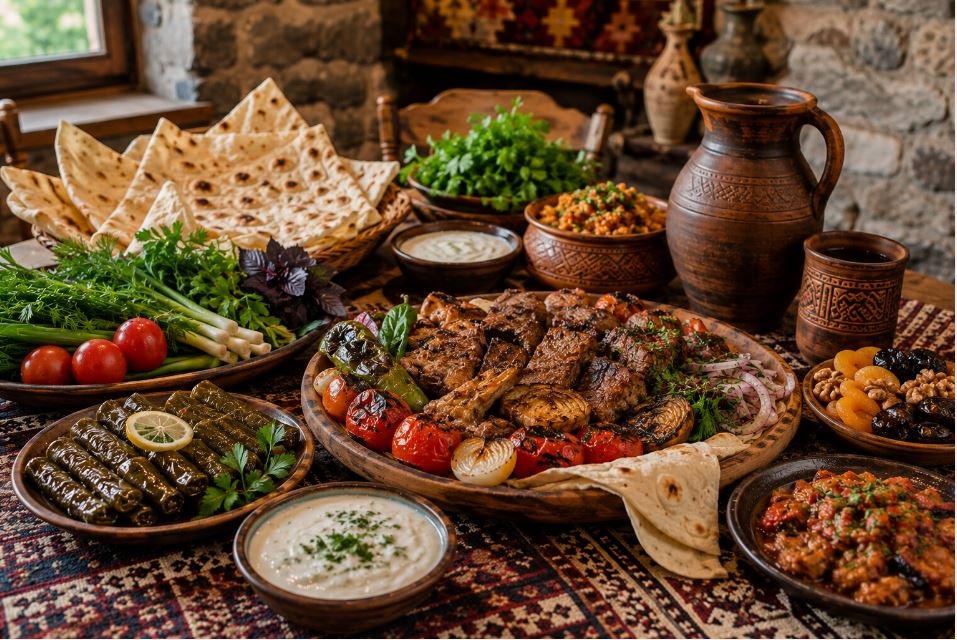
At first, this can surprise visitors. But very quickly, you understand that it is not only about eating. It is about care, respect, and warmth.
In Armenia, sharing food is one of the most natural ways to say: you are welcome here.
Final Thoughts
After exploring Armenian food, I can say that it helped me understand Armenia in a very personal way. The cuisine is traditional, generous, emotional, and full of character. It speaks through lavash, fire, herbs, fruits, family recipes, coffee, and long conversations around the table.
For me, Armenian food was not just something I tasted. It was something I experienced. It showed me how deeply food can be connected with memory, hospitality, and identity.
If you want to feel the heart of Armenia, start with its food. Sit at the table, try the dishes, listen to the stories, and let the country welcome you one bite at a time.